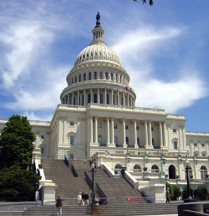
January 2018 – U.S. Secretary of the Interior Ryan Zinke unveiled a draft proposal in early January 2018, to permit drilling in most U.S. continental-shelf waters. The proposal was intended to further the goal of US energy independence and dominance. The proposal would include 7 lease sales in the Pacific Region (2 each for Northern California, Central California, and Southern California, and 1 for Washington/Oregon).
A recent poll of Californians showed that nearly 70 percent of residents oppose offshore drilling and say beaches are important to the state’s economy and quality of life.
California has always been leery of off-shore drilling, initially because of the eye-sore rigs would cause in a state known for its long and beautiful coastline that has enticed both vacationers and new residents. However, a 1969 oil spill near Santa Barbara tarred sea-life and increased “red-tides”, and gave impetus to a strong environmental movement. a 2015 Southern California spill from a pipeline serving a platform in federal waters that blackened more than 100 miles (160 kilometers) of public beaches and closed two state parks. No new federal off-shore leases have been approved since 1984.
California’s statutory standing stems from a 1972 federal coastal act which gives California extensive input on federal actions along the coast, including the granting of federal oil leases. In 1994, the California Legislature made findings in Assembly Bill 2444 (Chapter 970 of 1994), that off-shore oil and gas production in certain areas of state waters poses an unacceptably high risk of damage and disruption to the marine environment. That measure also established the California Coastal Sanctuary.
Gov. Jerry Brown (D-CA) joined governors of Oregon and Washington in vowing to do “whatever it takes” to stop the federal Department of Interior from opening their states’ waters to new oil leases. State officials, environmental groups and oil-industry analysts say California has solid regulatory and legal means to try to make good on that threat.
Currently California, which has authority within their state waters (the three-mile limit) to deny any permits for any oil pipelines that would connect oil platforms to land, along with any transport centers, refineries or holding stations once the crude makes it ashore.
While there are ways around California’s three-mile limit — such as using ships to transport oil from platforms in federal waters instead of pipelines. But considering all the potential financial, regulatory and legal, and public image problems oil companies would face in drilling off California, oil prices would have to go far higher to make that enticing. “Operators don’t tend to operate (off) states that don’t want production,” said Kevin Book, an analyst with ClearView Energy Partners in Washington, D.C., for oil companies, “when you do the math on paper it doesn’t add up”.
“Nothing galvanizes bipartisan resistance in California like the threat of more offshore drilling,” said Dayna Bochco, chairwoman of the California Coastal Commission, which would have the authority to oppose offshore leases under that act. “We’ve fought similar efforts before, and we will fight them again.”
Offshore drilling led to one of the worst environmental disasters in U.S. history, the 2010 Deepwater Horizon rig explosion and subsequent spill of 215 million gallons of crude into the Gulf of Mexico, fouling beaches from Louisiana to Florida. The effects of the spill are still being felt by residents, fishermen, and sea- life more than seven years later.
Leave a Reply
You must be logged in to post a comment.